How Many Grams in a Milliliter?
1 g
1 milliliter of water weighs 1 gram. Other ingredients weigh more or less, so pick yours in the converter.
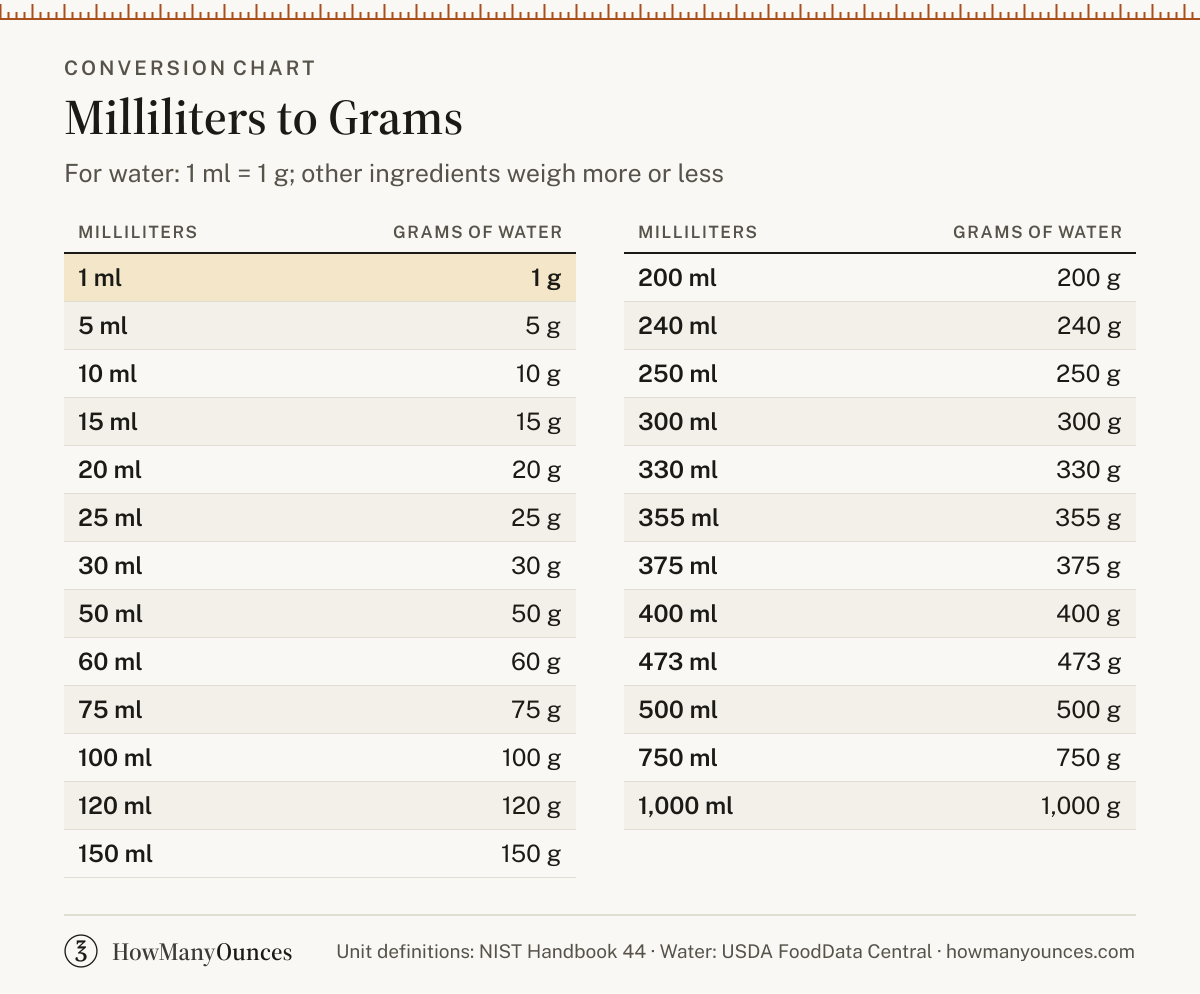
Milliliters to Grams conversion chart
| Milliliters | Grams (water) |
|---|---|
| 1 ml | 1 |
| 5 ml | 5 |
| 10 ml | 10 |
| 15 ml | 15 |
| 20 ml | 20 |
| 25 ml | 25 |
| 30 ml | 30 |
| 50 ml | 50 |
| 60 ml | 60 |
| 75 ml | 75 |
| 100 ml | 100 |
| 120 ml | 120 |
| 150 ml | 150 |
| 200 ml | 200 |
| 240 ml | 240 |
| 250 ml | 250 |
| 300 ml | 300 |
| 330 ml | 330 |
| 355 ml | 355 |
| 375 ml | 375 |
| 400 ml | 400 |
| 473 ml | 473 |
| 500 ml | 500 |
| 750 ml | 750 |
| 1,000 ml | 1,000 |
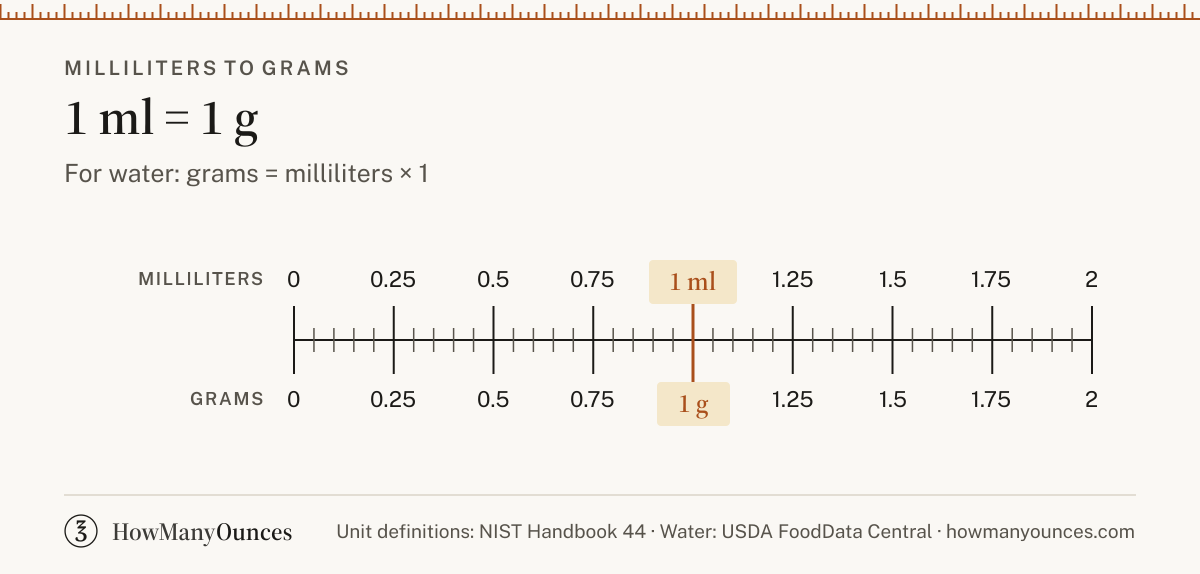
How to convert milliliters to grams
grams = milliliters × 1
Example: 350 ml × 1 = 350 g.
Multiply the milliliters by the density of the food, which is its weight in grams per milliliter. The formula above is set for water. For anything else, pick the ingredient in the converter or use its own density.
Whole milk has a density of about 1.031 g per ml. So 500 ml of milk weighs 500 × 1.031 = 516 grams, a little more than the same volume of water.
Dry foods go the other way. A jug filled to the 200 ml line with all-purpose (plain) flour holds only about 106 grams. To turn grams back into milliliters, divide by the density, or use the grams to milliliters converter.
Why weight depends on the ingredient
A milliliter measures space, while a gram measures mass. Two foods can fill the same space and still weigh very different amounts.
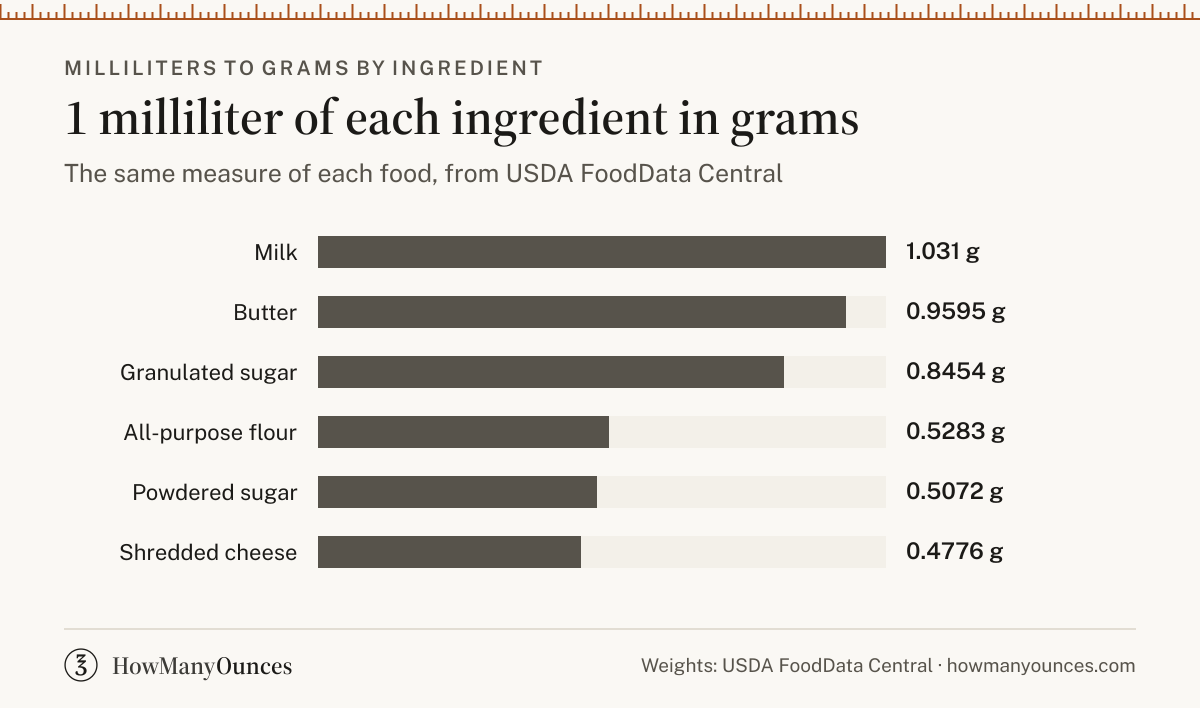
Fine powders and shreds trap a lot of air between the pieces. That is why flour, powdered (icing) sugar and shredded cheese weigh roughly half as much per milliliter as milk does. Whole fruit leaves gaps too, so raw blueberries come to only about 0.63 g per ml.
| Ingredient | 1 ml = |
|---|---|
| All-purpose flour | 0.5283 g |
| Granulated sugar | 0.8454 g |
| Butter | 0.9595 g |
| Milk | 1.031 g |
| Powdered sugar | 0.5072 g |
| Shredded cheese | 0.4776 g |
Weighing liquids on a kitchen scale
A scale can stand in for the measuring jug, which helps when a metric recipe lists liquids in milliliters and everything else in grams. Set the bowl on the scale, press tare so it reads zero, and pour until the display shows the weight you need.
For milk, aim a little above the milliliter figure. A recipe that asks for 250 ml of milk needs about 258 g on the scale. Weighing also saves you from reading a jug at eye level and leaves one less thing to wash.
Milliliters and grams: questions
Is 1 ml equal to 1 gram?
Only for water and liquids close to it in density. A milliliter of water weighs 1 gram, but a milliliter of milk weighs a bit more and a milliliter of flour about half as much. The gram figure always depends on what fills the spoon or jug.
How many grams is 100 ml?
It depends on what the 100 ml holds. Whole milk weighs about 103 g, granulated sugar about 85 g, and all-purpose flour about 53 g. Pick the ingredient in the converter for anything not listed.
How many grams is 5 ml?
A metric teaspoon holds 5 ml. Filled level with granulated sugar, it weighs about 4.2 g. The same spoon of all-purpose flour weighs about 2.6 g, so the spoon size alone never tells you the grams.
Does milk weigh more than water?
Yes, slightly. USDA data put a cup of whole milk at 244 g, so a liter comes to about 1,031 g. The gap is small for a sauce, but it adds up in a large batch or a bread dough.
How many grams of flour are in 250 ml?
About 132 grams of all-purpose flour, based on the USDA cup weight. Flour pressed down into the jug weighs more. When a recipe gives flour in grams, weigh it instead of measuring by volume.
Related conversions
Sources: Unit definitions: NIST Handbook 44 · Densities: USDA FoodData Central · Last reviewed · Report an error
https://howmanyounces.com/milliliters-to-grams/