How Many Pints in a Pound?
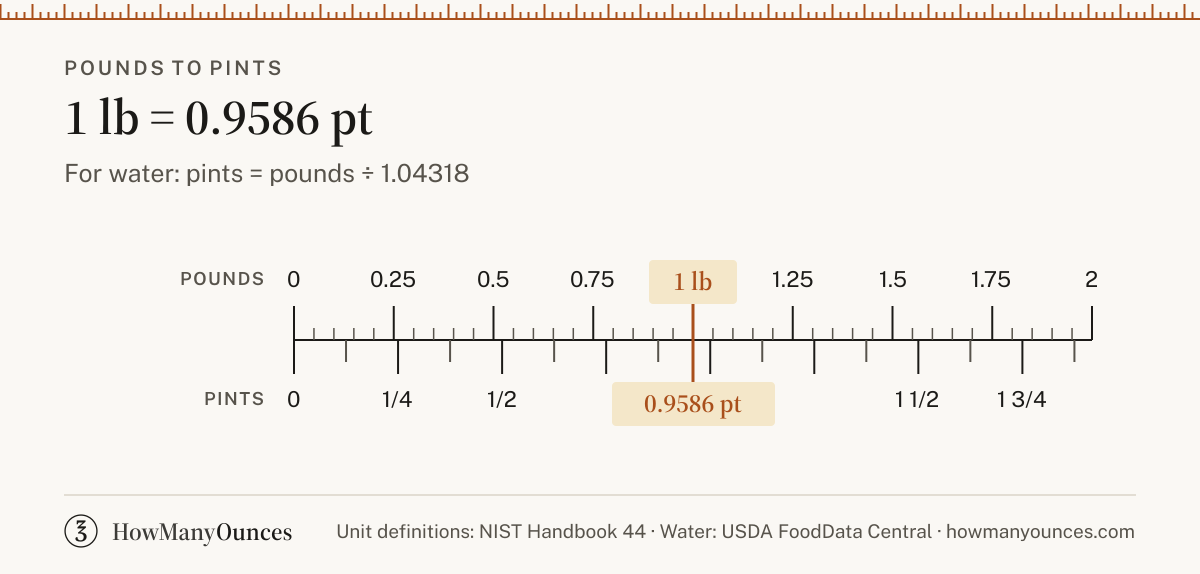
0.9586 pt
1 pound of water takes up 0.9586 pint. Lighter or denser ingredients take up more or less, so pick yours in the converter.
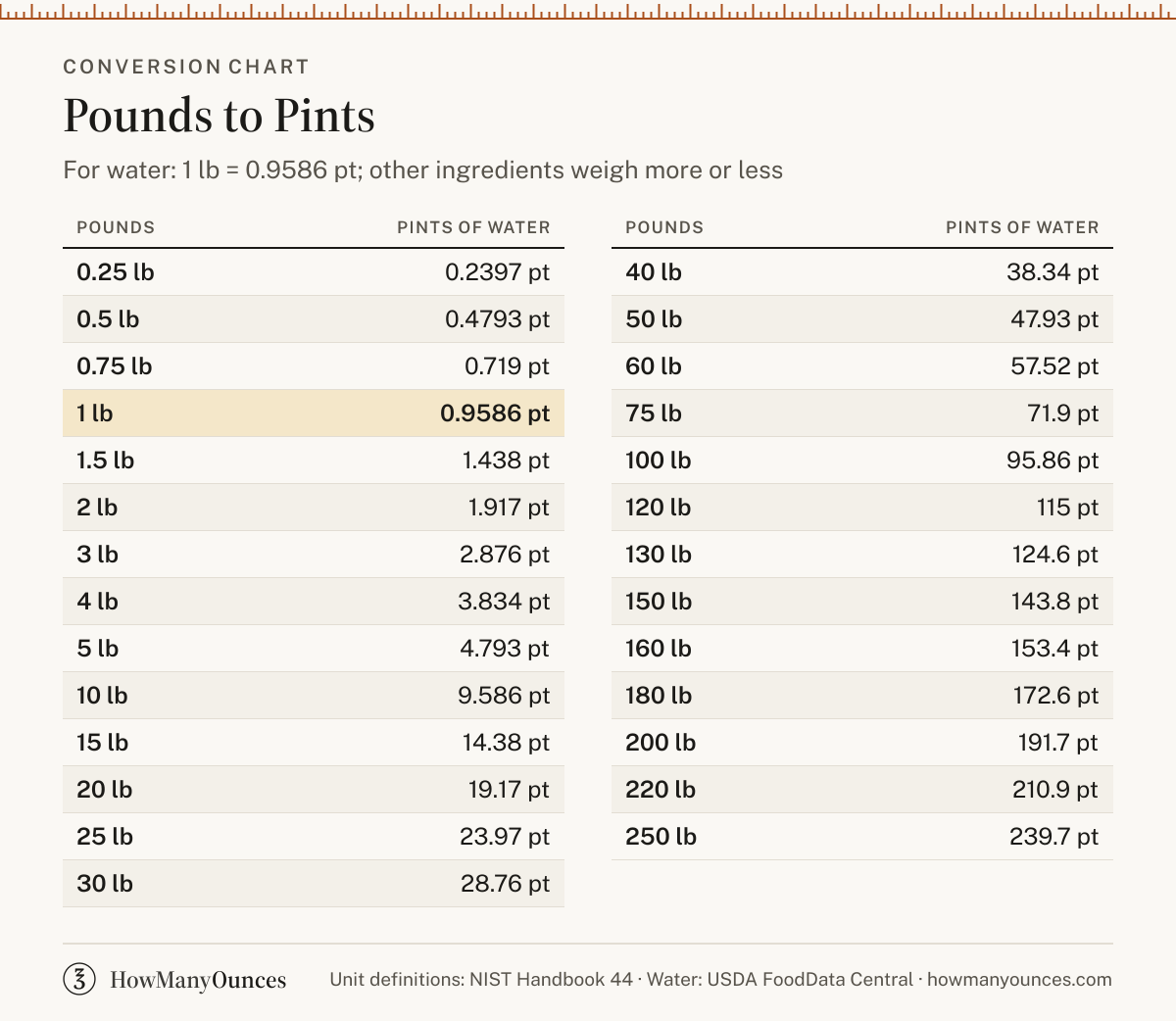
Pounds to Pints conversion chart
| Pounds | Pints (water) |
|---|---|
| 0.25 lb | 0.2397 |
| 0.5 lb | 0.4793 |
| 0.75 lb | 0.719 |
| 1 lb | 0.9586 |
| 1.5 lb | 1.438 |
| 2 lb | 1.917 |
| 3 lb | 2.876 |
| 4 lb | 3.834 |
| 5 lb | 4.793 |
| 10 lb | 9.586 |
| 15 lb | 14.38 |
| 20 lb | 19.17 |
| 25 lb | 23.97 |
| 30 lb | 28.76 |
| 40 lb | 38.34 |
| 50 lb | 47.93 |
| 60 lb | 57.52 |
| 75 lb | 71.9 |
| 100 lb | 95.86 |
| 120 lb | 115 |
| 130 lb | 124.6 |
| 150 lb | 143.8 |
| 160 lb | 153.4 |
| 180 lb | 172.6 |
| 200 lb | 191.7 |
| 220 lb | 210.9 |
| 250 lb | 239.7 |
How to convert pounds to pints
pints = pounds ÷ 1.04318
Example: 5 lb ÷ 1.04318 = 4.793 pt.
Divide the weight in pounds by what one pint of that food weighs. The formula above divides by the weight of a US pint of water. For berries, milk or butter, pick the food in the converter so it divides by the right weight.
Say you picked 3 lb of blueberries and want to freeze them in containers that hold a US pint. A pint of whole berries weighs about 0.653 lb, so you need 3 ÷ 0.653 = 4.6 containers. Round up so the last, part-full pint has a home too.
To turn a pint count back into pounds, use the pints to pounds converter.
US vs UK pints
A British pint is the bigger one, so the same weight fills less of it. A pound of water comes to 0.8 imperial pint, and a pound of whole milk to about 0.77 imperial pint.
That matters when a UK recipe gives milk or stock in pints and you only have a scale. Weigh by the imperial figures, not the US ones in the chart above.
| Unit | Size | Used in |
|---|---|---|
| US pint | 473.2 ml | US |
| imperial pint | 568.3 ml | UK |
Why weight depends on the ingredient
Weight tells you how much food you have, and pints tell you how much room it needs. Liquids fill their pint solidly, but lighter foods spread out much more.
Loose, bumpy foods trap air. A pound of blackberries fills about 1.57 pints, and a pound of active dry yeast, poured into jars, fills about 1.18 pints. Picking the right food in the converter matters far more here than any rounding.
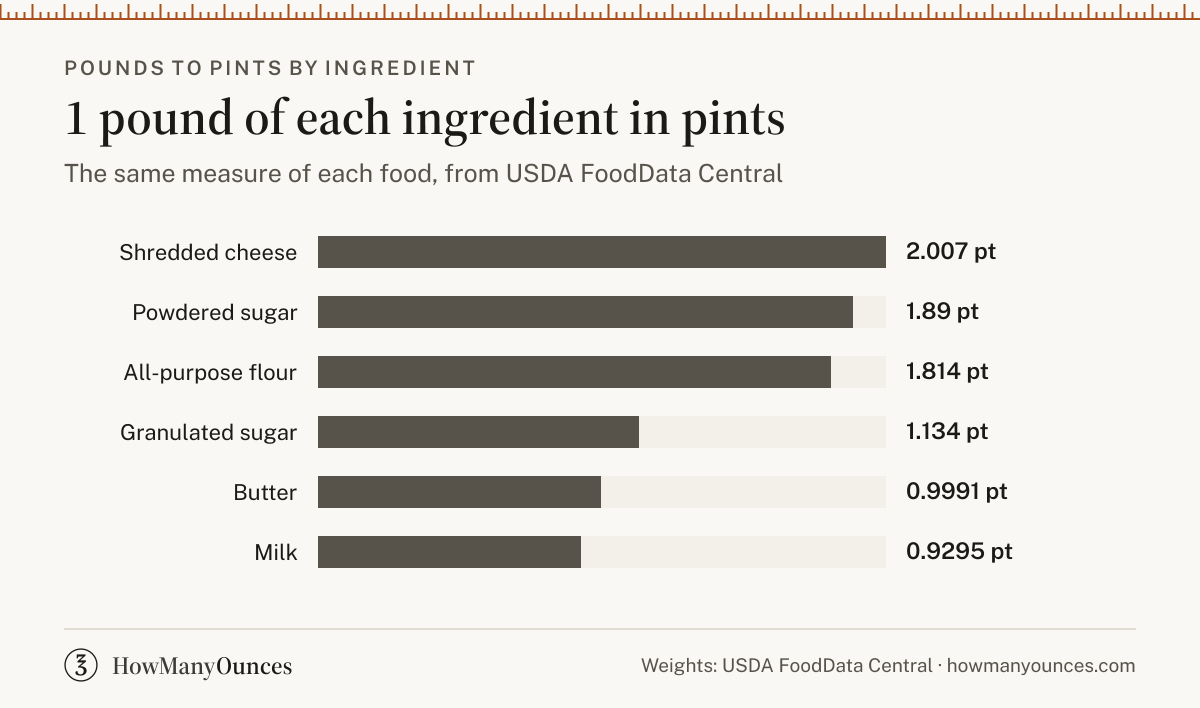
| Ingredient | 1 lb = |
|---|---|
| All-purpose flour | 1.814 pt |
| Granulated sugar | 1.134 pt |
| Butter | 0.9991 pt |
| Milk | 0.9295 pt |
| Powdered sugar | 1.89 pt |
| Shredded cheese | 2.007 pt |
Pounds and pints: questions
Is a pound of water a pint?
Nearly, but not quite. A pound of water fills 0.96 US pint, which is 15.3 fluid ounces out of the 16 fluid ounces in a pint. A full pint of water weighs a little more than a pound.
How many pints is a pound of butter?
A pound of butter measures exactly 1 pint. It equals 4 sticks, and those sticks together make 2 cups, so for butter the pound-to-pint swap needs no math. Whipped butter is the exception, because the air whipped into it makes each cup lighter.
How many pints is a pound of sugar?
A pound of granulated sugar fills about 1.13 US pints. Powdered (icing) sugar is much fluffier, so a pound of it fills about 1.89 pints before sifting. Sifting adds more air, so a sifted pound takes up even more room.
How many pints is 10 pounds?
For water, 10 lb fills about 9.6 US pints. The same weight of all-purpose flour would need about 18.1 pints of space, which is why a big sack of flour looks so bulky next to a jug of water.
How many pints of milk weigh 2 pounds?
About 1.86 US pints of whole milk weigh 2 lb. Milk is slightly heavier than water, so a pound of it fills a little less than a pound of water does.
Related conversions
Sources: Unit definitions: NIST Handbook 44 · Densities: USDA FoodData Central · Last reviewed · Report an error
https://howmanyounces.com/pounds-to-pints/